Picking Up Your Carte de Séjour in France
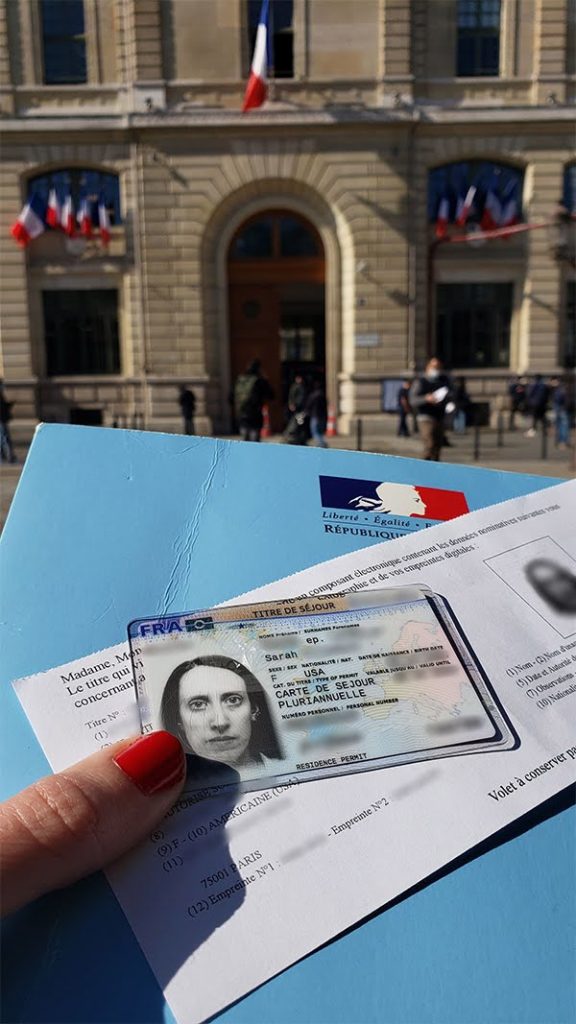
Two months. That’s how long I stared at my phone waiting for an SMS that felt like it was never coming.
I’d done everything right, or at least I thought I had. But my drop-off appointment at the préfecture had left me slightly traumatized, convinced I’d handed over the wrong thing, or not enough of the right thing. My employer was starting to ask questions. I was starting to panic. Classic immigrant spiral.
So I did what any reasonable person does after two months of radio silence from a French government office. I sent a message, fully expecting it to disappear into the bureaucratic void forever.
Five days later, my phone buzzed.
If you’ve been through this process, you know exactly what that buzz feels like.
A note before we go further
I picked up my carte de séjour in Paris several years ago, when the process still meant showing up in person at the préfecture with a folder full of documents and a lot of nervous energy. Since then, the process has moved online through ANEF (Administration Numérique pour les Étrangers en France), and the préfecture visits look quite different depending on your département.
So while I can’t walk you through the current ANEF process step by step, what I can tell you is what remains true regardless of the system: the anxiety, the documents, the questions you’ll have, and what it actually feels like to finally hold that card in your hands.
For the most current and accurate information on how to apply and track your application, the official ANEF portal is your best resource: anef-etrangers.gouv.fr
What your carte de séjour actually means
Your carte de séjour is more than a piece of plastic. It’s proof that France has officially said yes to you. It’s what your employer stops asking about. It’s what lets you exhale, at least until the renewal process begins and the whole beautiful nightmare starts again.
For those new to the process, the carte de séjour is your residence permit. It confirms your legal right to live and work in France, and depending on your situation, it will be valid for one, two, or ten years. Losing it, having it expire, or not having it at all creates a cascade of complications that touches everything from your bank account to your healthcare coverage.
Which is why that SMS hits the way it does.
Carte de séjour vs titre de séjour: let’s clear this up
If you’ve spent any time in expat Facebook groups or forums, you’ve probably seen these two terms used interchangeably. They’re not quite the same thing, and the distinction matters.
The titre de séjour is the umbrella term. It refers to any official document that authorises a foreigner to reside in France, and it comes in several forms depending on your situation and how long you’ve been here. Think of it as the category.
The carte de séjour is one specific type of titre de séjour. It’s the physical card format that most people are familiar with, typically issued for stays of more than one year. If someone asks if you have your papers in order, this is usually what they mean.
You might also hear titre de séjour used informally to refer to the carte de séjour specifically, which is where the confusion comes from. Both terms are technically correct in different contexts, but knowing the distinction saves you from a lot of head-scratching when you’re filling out forms or talking to your préfecture.
How long does it actually take?
The honest answer is: it depends. For a first-time carte de séjour application, expect somewhere between 2 and 5 months from submission to notification. Renewals tend to move a little faster, typically between 1 and 3 months, though this varies significantly depending on your préfecture.
Once your dossier has been processed and your fingerprints taken, you can generally expect to be notified that your card is ready within about 21 days. That notification will come by email or SMS through your ANEF account. Yes, that buzz.
One important thing to know: if four months pass with no response at all, French administrative law considers that a silent refusal, which opens the door to filing a formal appeal. You’re not just waiting forever into the void. There is a legal limit.
What to do when the silence goes on too long
If you’ve been waiting and hearing nothing, the first step is to check your ANEF account. You can track the status of your application in real time through your personal ANEF space. If the status hasn’t moved in a while, you can send a message directly through the platform.
For the most current document requirements based on your specific visa type and situation, the official resource is service-public.fr. These lists are updated regularly and vary depending on your circumstances. Your préfecture’s website is also worth checking, as requirements can vary by département.
If you applied within Paris and have no news and are looking to contact someone, you can try writing the office of titres de séjours. Be prepared for an automated reply. Do not give up. If there is anything, be persistant and do not give up. Here’s the message I used when I contacted them about my carte de séjour:
Bonjour,
Je me permets de vous contacter car je n’ai pas reçu le SMS m’informant de la disponibilité de mon titre de séjour . Pourriez-vous, s’il vous plaît, m’indiquer où en est mon dossier ? Je vous remercie par avance.
Bien cordialement,
Sarah
Why appointments feel impossible to find right now
If you’re staring at your ANEF account and finding ZERO available rendez-vous préfecture spots, you’re not imagining it. Demand for préfecture appontments has outpaced the number of slots available, especially in Paris and the Île-de-France region, and that gap has given rise to a small industry of third-party appointment-alert services. These tools monitor préfecture booking calendars around the clock and notify you the moment a slot opens. This applies whether you’re booking your original appointment or waiting on the remise de titre de séjour, the actual pickup step once your card is ready. A few you may come across if you search for this: rendez-vous-prefecture.fr, RDV Alerte, and RDV Hub.
A caveat: these are independent, third-party services with no affiliation to the French government, and I haven’t used any of them personally, so I can’t vouch for their reliability. If you try one, treat it strictly as a notification layer on top of the official process. You need to still submit and track your actual application through ANEF or your préfecture’s own portal. Do your own research before handing over any personal information, and never pay for something the préfecture itself offers for free.
If you’ve searched “aucun rendez-vous disponible” and come up empty-handed over and over, know that this is a widespread, well-documented frustration and not a sign that there is something wrong with your file.
What to have ready regardless of the system
Whether you’re navigating ANEF or heading to a physical appointment, certain things never change. Here’s what you’ll want to have on hand:
Your passport, valid and accessible. A copy of your current visa or previous titre de séjour if applicable. Proof of address dated within the last three months. Your convocation or appointment confirmation. And depending on your situation, proof of employment, marriage, or whatever status grounds your application.
One thing I learned the hard way: have both originals and copies of everything. Every single thing. French administration has a way of asking for the document you left at home.
The pickup day
The morning of my appointment, I left our apartment on Rue Saint Denis and walked over to the Île de la Cité with what can only be described as a 20-pound accordion folder tucked under my arm. Every document I had ever produced since arriving in France was in there. Was any of it necessary for a simple card pickup? Probably not. But when you’re an immigrant in France, you learn very quickly that you bring everything, always, because you never know what someone behind a desk is going to ask for.
My hands were sweating before I even got there.
I had braced myself for hours in line. There were plenty of people waiting outside, which did nothing to calm my nerves. But once I got through security, things moved faster than I expected. I got my number, found a seat, and watched the board. When my number finally came up, the whole transaction took less than five minutes.
And then I was walking out into the Paris sunshine with a shiny new card in my hand that said, officially, that I could stay.
I may have cried a little once I was far enough away from the building that nobody could see me. I’m not ashamed of it.
A few things I wish someone had told me
If you are somewhere in the middle of this process right now, here is what I want you to know.
Patience is not just a virtue in French administration. It is a survival skill. Every single step of this journey will require it, from the initial application to the pickup day to the renewal that comes around faster than you expect. Breathe. It will move, even when it feels like it won’t.
Read everything carefully, especially when it comes to documents. French administrative language has a way of being technically clear and practically confusing at the same time. When a document list says “proof of address,” it means a specific kind of proof from a specific kind of source dated within a specific window. Read between the lines and when in doubt, bring more than they asked for. See also: the accordion folder.
And please, do not give up.
The French administrative system has been under enormous pressure since Covid. Offices are understaffed, wait times are longer, and the volume of applications has increased significantly as more and more people choose to make France their home. The system has not caught up with the demand yet. That two months of silence I experienced? It was not personal. It was a system doing its best under difficult circumstances.
Your card is coming. Keep going.
How long does it take to get a carte de séjour after applying?
For a first-time application, expect roughly 2 to 5 months from submission to notification. Renewals tend to move faster, typically 1 to 3 months, though this varies by préfecture. Once your dossier is processed and your fingerprints taken, you’ll usually be notified within about 21 days that your card is ready.
What if I haven't heard anything about my carte de séjour?
First, check you ANEF account for status updates and send a message through the platform if nothing has moved. If you applied in Paris, you can also write directly to the office to titres de séjour, though expect an automated reply at first. If 4 months pass with no response, French administrative maw considers that a silent refusal, which opens the door to a formal appeal.
What's the difference between a carte de séjour and a titre de séjour?
Titre de séjour is the umbrella term for any official document authorizing a foreigner to reside in France. Carte de séjour is one specific type of titre de séjour, the physical card format issued for stays for more than one year. In everyday conversation people often use these terms interchangeably, but the distinction matters when you are filling out forms.
Why can't I find a rendez-vous préfecture appointment?
Demand for prédecture appointments had outpaced available spots, especially in Paris and the Île-de-France region. This is a widespread, well-documented issue and not necessarily a sign that something is wrong with your file. Some people turn to third-party appointment alert services that monitor booking calendars and notify you when a slot opens up, though these are independent tools with no official government affiliation.
What do I bring to pick up my carte de séjour?
Bring your valid passport and current visa or previous titre de séjour . You’ll also need proof of address dates within the last 3 months and your convocation or appointment confirmation. Be sure to check your convocation carefully, since it will often list specific additional documents required for your personal situation. Bring both originals and copies of everything else, since French administration often asks for that one document you left at home (which was my case).
What happens during the remise de titre de séjour appointment itself?
The pickup appointment itself is typically quick, often under five minutes once your number is called, even if the wait to be seen takes longer. You’ll need everything listed on your convocation and once it’s done, you’ll walk out with your card and official confirmation that you can stay.


You May Also Like

How to Set Goals in France (& Why French Bureaucracy Forces You To)
8 January 2026
Facturation Électronique 2026 : What Every Freelancer and Small Business in France Needs to Know
1 May 2026
3 Comments
Farooq
Hello madame. I have a question.
When you apply for carte sejure in préfecture before 2 months your long stay visa finished..
Which option you chosed for carte sejure on website.
Renouvellement de titre séjour.
Or primer demand titre séjour..
Because i have to much confused about it.
I will wait your response .
Thank you
Sarah
Hello Farooq.
It depends on the visa that you have arrived on. In my case (visa long séjour valant titre de séjour vie privée et familiale) I clicked on the renouvellement de titre de séjour because my visa was considered a carte de séjour once I validated it upon arrival. The website has very descriptive reasons for each step. I would say in most cases, you will choose to renew your titre de séjour, but this all depends on the type of visa that you have. I wrote about my process here for renewing my titre de séjour for the first time.
Pingback: