How I Applied for French Nationality by Marriage as an American
Important: The language requirement for nationality by marriage changed in January 2026. B2 is now required, up from B1. If you are preparing your application now, read the documents section carefully and plan your language test accordingly.
Applying for French nationality by marriage was the last step in my administrative journey as an immigrant living in France. It was not like any other préfecture appointment I had been through. This was the one I had been slowly preparing for since I arrived in Paris. Here is the full story: my timeline, my documents, the gendarme who checked Thomas’s closet, the interview at the préfecture, and what it felt like to find my name on the electoral list on a Friday afternoon.
Table of Contents
My Situation and Timeline
I became eligible to apply for nationality by marriage after four years of being married to Thomas. That date was November 17, 2023. I arrived in France on March 4, 2020, on a VLS-TS VPF as the spouse of a French national. I validated my visa within the first three months, renewed my titre de séjour at the end of year one, and was granted a carte de séjour pluriannuelle. In early 2023 I applied for renewal again and requested the carte de résident de 10 ans at the same time. I was granted it and picked up the card in May 2023.
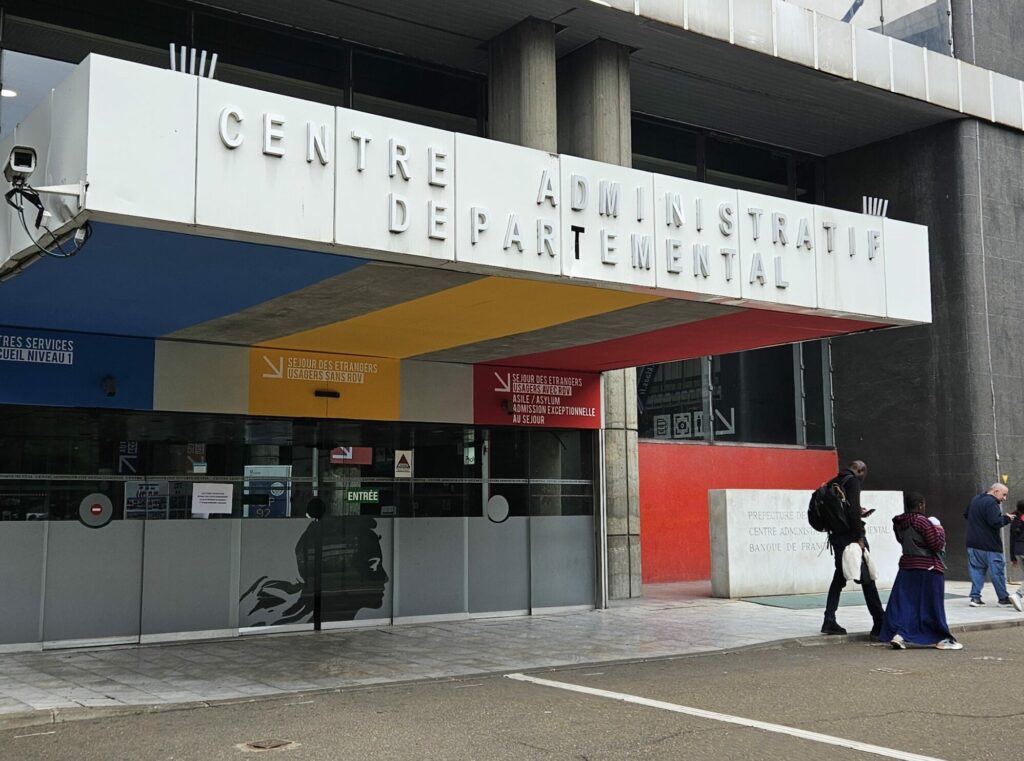
The TCF IRN I had taken in preparation for the 10-year card also covered the language requirement for nationality, so once I had the card in hand I spent the rest of 2023 gathering the remaining paperwork. I submitted my application in person at the Nanterre préfecture on Thursday December 7, 2023.
Here is the full timeline from there:
- December 7, 2023: application submitted in person at Nanterre
- January 25, 2024: email from the commissariat de police de Saint Cloud requesting an interview
- February 1, 2024: home interview with the gendarme
- May 24, 2024: convocation by email for a préfecture interview
- July 3, 2024: interview at the Nanterre Bureau des Naturalisations
- September 6, 2024: found my name on the electoral list
- August 27, 2024: official date of nationality grant (received by letter the following week)
- October 16, 2025: nationality ceremony at the préfecture
Am I Eligible?
For nationality by marriage (déclaration par mariage), the conditions as of 2026 are:
- Married to a French national
- Community of life with your spouse, continuous since the date of marriage
- Four years of marriage at the time of application (reduced to three years if you have lived together abroad for at least three years, or if you speak French at B2 level)
- French language certificate at B2 level minimum — this increased from B1 in January 2026 under the 2024 immigration law
- No serious criminal record
Note on the language level: When I applied in December 2023, B1 was the threshold. It is now B2. If your TCF IRN or DELF results are at B1, they will not be sufficient for a new application submitted from 2026 onwards. Plan accordingly and check the current requirements at service-public.fr before building your dossier.
Your first point of reference for your specific situation should always be your préfecture. I applied through Nanterre as a resident of Hauts-de-Seine (92) and followed the procedure listed on their website for the déclaration par mariage. The process and documents required can vary by département.
Documents Submitted
The Hauts-de-Seine préfecture required in-person submission of the application. I followed the documents list on the préfecture website for déclaration par mariage. Here is exactly what I submitted:
- Cerfa n° 15277*04 — filled out and signed by both parties. Submit two copies.
- Fiscal stamp of 55€ (do not stick it to anything — place it loose in a plastic sleeve)
- 2 ID photographs from a Photomaton — write your first name, last name, and date of birth on the back of each
- Photocopy of the front and back of my carte de résident
- Photocopy of my passport: ID page and every marked page (stamps and writing)
- Copy of my birth certificate, apostilled and translated into French
- Copy of the birth certificate of each of my parents, if my birth certificate does not indicate their birth dates
- Copy of the transcription of my marriage licence, dated less than 3 months (required because we were married in the USA)
- Copy of Thomas’s birth certificate, dated less than 3 months
- A recent bill (electricity, water, gas, CAF, etc.) showing both names
- Legal documents proving community of life for a minimum of 4 years — I used tax returns and bills
- Proof of living together for at least 3 years in France — previous and current rental contracts, tax returns
- FBI background check, apostilled
- TCF IRN results as proof of French language level
TIP: Only French documents need to be less than 3 months old. This is a very common misconception. Foreign documents, their translations, and their apostilles are not subject to the 3-month rule.
A note on the FBI background check: The FBI check must be apostilled by the US Department of State (a federal apostille — state apostilles are not valid for this document). It must also be translated into French by a sworn translator (traducteur assermenté). Note that the FBI background check is only valid for 6 months from its issue date, so time your request accordingly. Confirm the exact requirements with your préfecture, as they can vary.
Dropping Off the Application
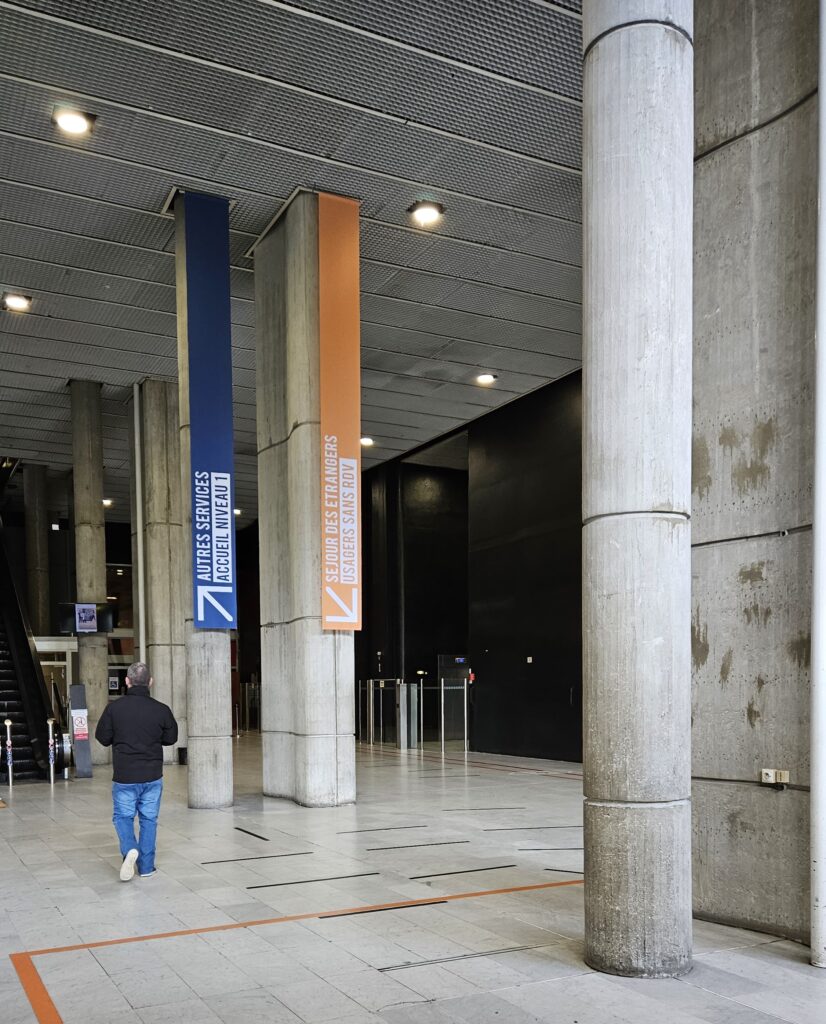
Applying for nationality by marriage at the Hauts-de-Seine préfecture requires you to physically drop your application off to an agent. You need to book an appointment through the préfecture website to do this. At the time I applied, online-only submission was only available for applications by décret, not by marriage. Check your own préfecture for their current rules before you show up.
When I dropped off my application on December 7, 2023, the agent went through my paperwork to verify everything was in order. He seemed quite new and checked with a colleague several times on several documents, which I found more reassuring than alarming. I had brought my full binder of backup documents just in case, but did not need them.
He did ask me to handwrite a timeline of our significant dates: when we first met, where we met, the key milestones up to the present day. I had not anticipated this. In hindsight, I should have typed one up and had it ready. Add it to your binder, you never know.
Interview with the Gendarme
On January 25, 2024, I received an email from the commissariat de police de Saint Cloud. She explained that she had tried to reach me in December but had no luck. When I checked my call log, there was indeed a missed call from a numéro privé on December 29, right in the middle of the holidays. No voicemail was left. We exchanged emails and settled on February 1, 2024, for her to come to the apartment.
I had asked several times whether Thomas needed to be present. She confirmed he did not.
The gendarme arrived and presented her identification. We had a 20 to 25 minute conversation. She had a form similar to the Cerfa, and worked through it methodically: contact information for both of us, our parents’ details, whether either of us had been previously married, how long I had lived in France.
She also asked about our history together: how we met, what our journey looked like, what our future plans were, why we moved to Saint Cloud, what we each do professionally, what we do for fun, whether we had any future plans together. She filled in her form as we talked.
At the end of the interview, she asked to see Thomas’s closet space and his side of the bathroom. I was not prepared for the closet, particularly since I had a pile of clean laundry on the bed that day. She just took a look, satisfied herself that his presence was clearly established in the home, and wrapped up. She told me the next step would be her filing her report through the commissariat to the préfecture, and that I could expect to be contacted for an on-site interview with my husband, possibly within 6 months.
Convocation to the Préfecture
On May 24, 2024 — just under four months after the gendarme visit — I received an email with a convocation attached. I had an interview at the Nanterre Bureau des Naturalisations on July 3, 2024 at 11 AM. Thomas and I both needed to bring our IDs. No additional documents were requested.
The convocation included a contact number in case the date did not work. I would advise treating that date as fixed unless it is genuinely impossible to attend.
Interview at the Préfecture
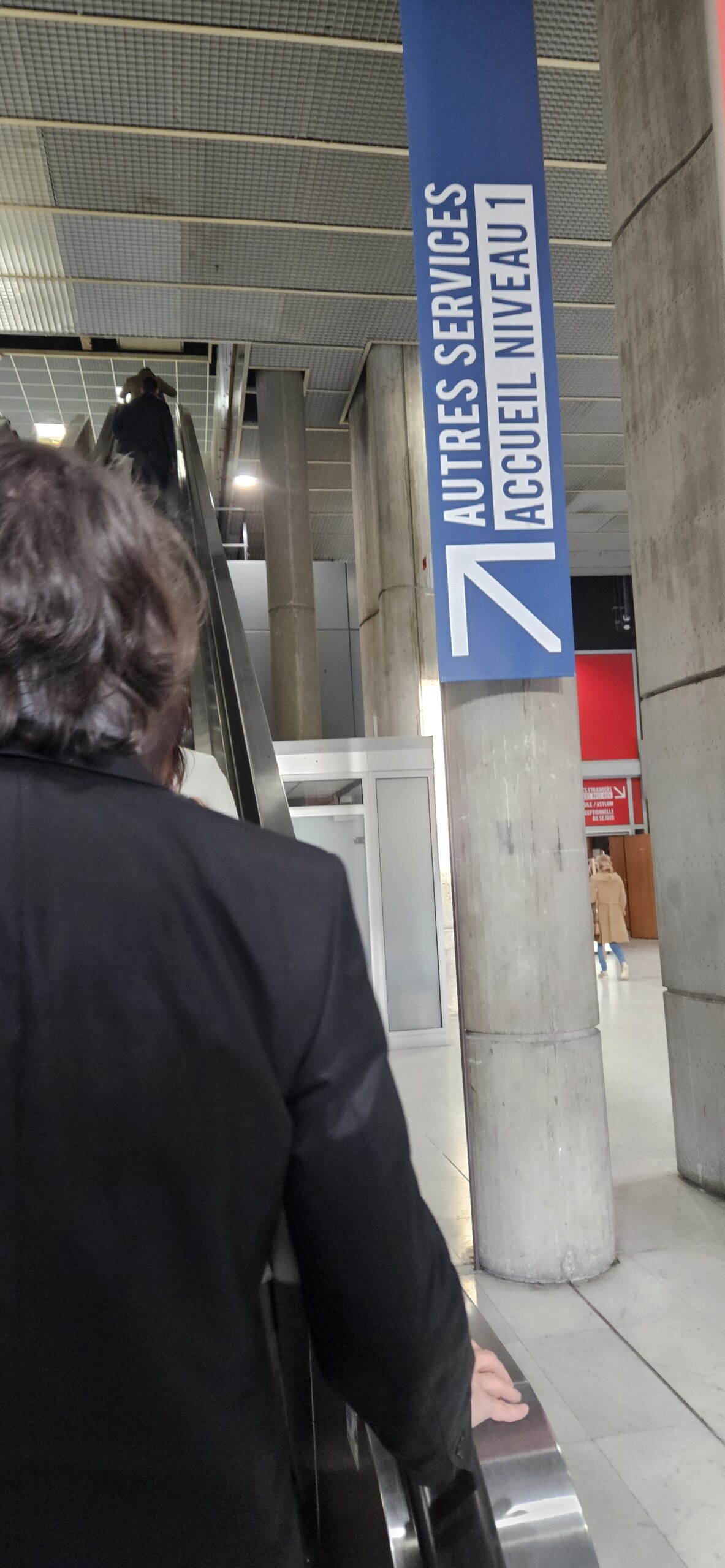
We arrived 15 minutes early, which turned out to matter, the escalators were out of order. The security guard saw I was six months pregnant and let us use the elevator. Small victories.
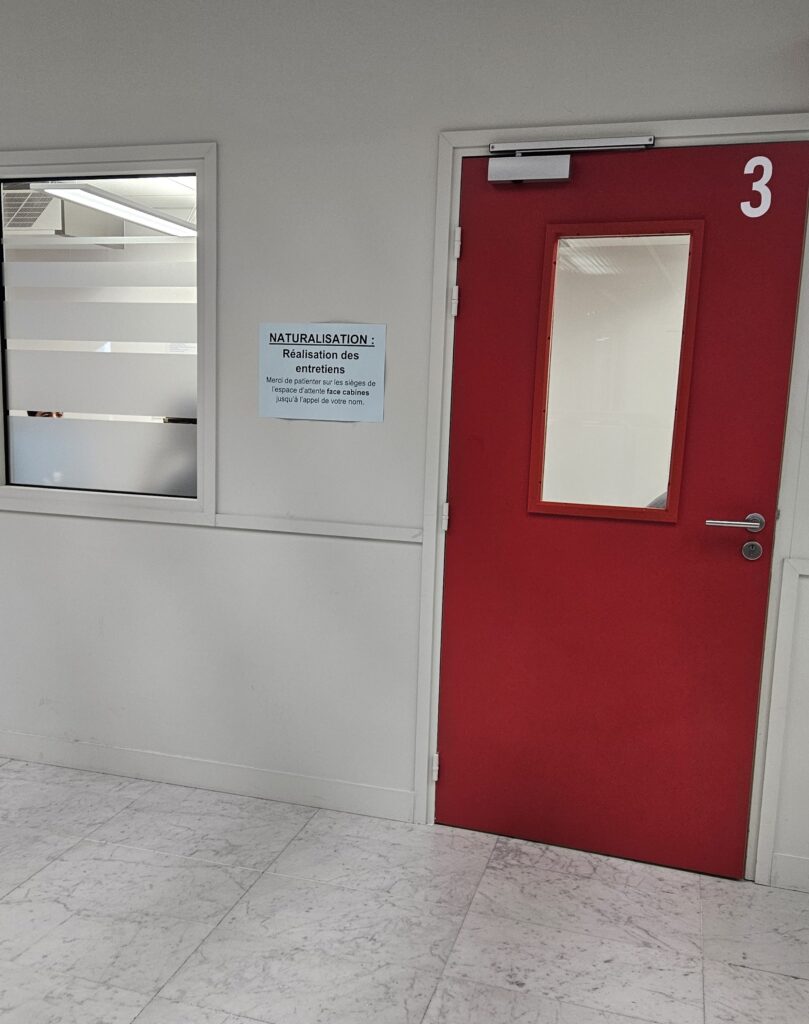
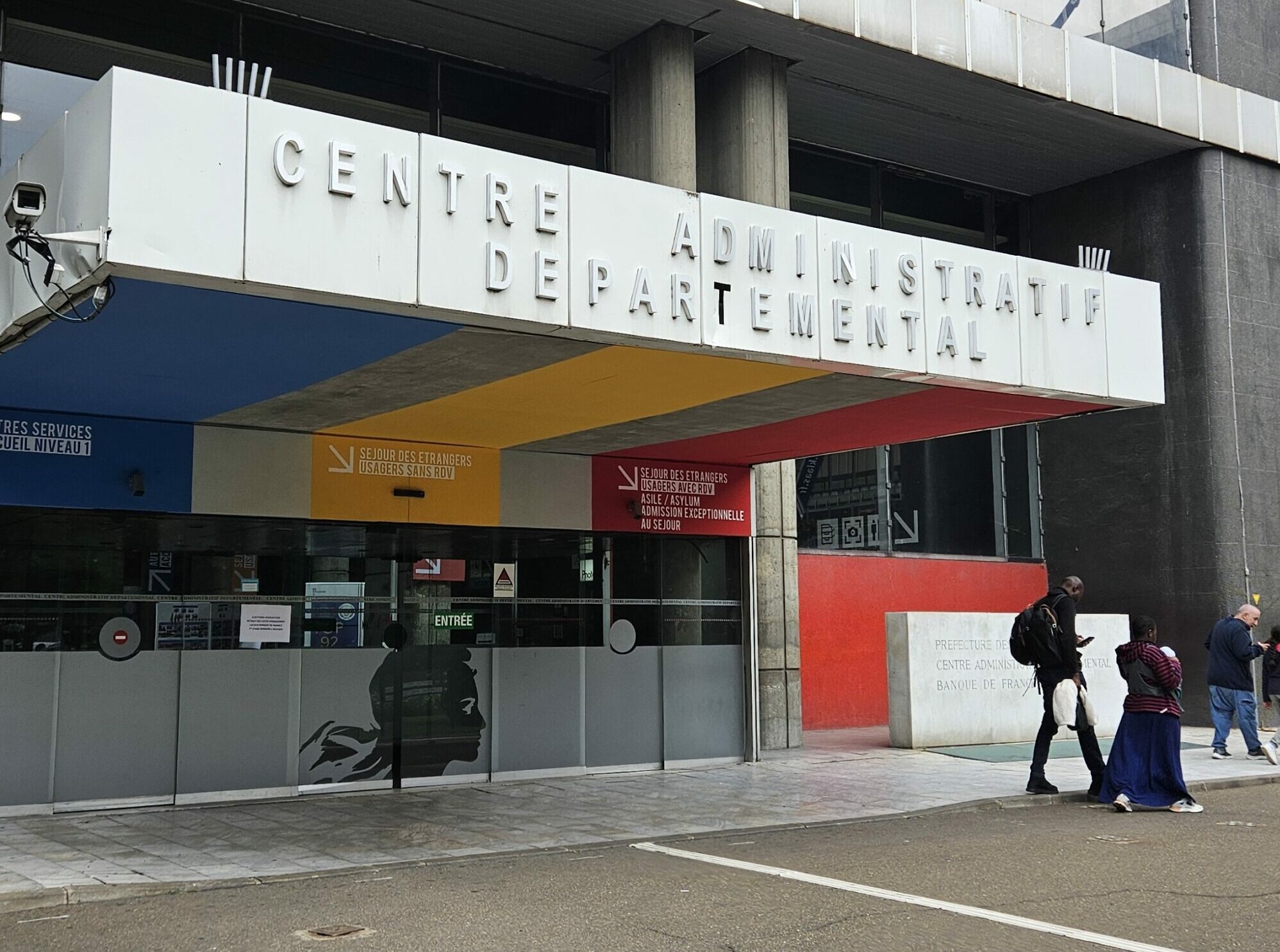
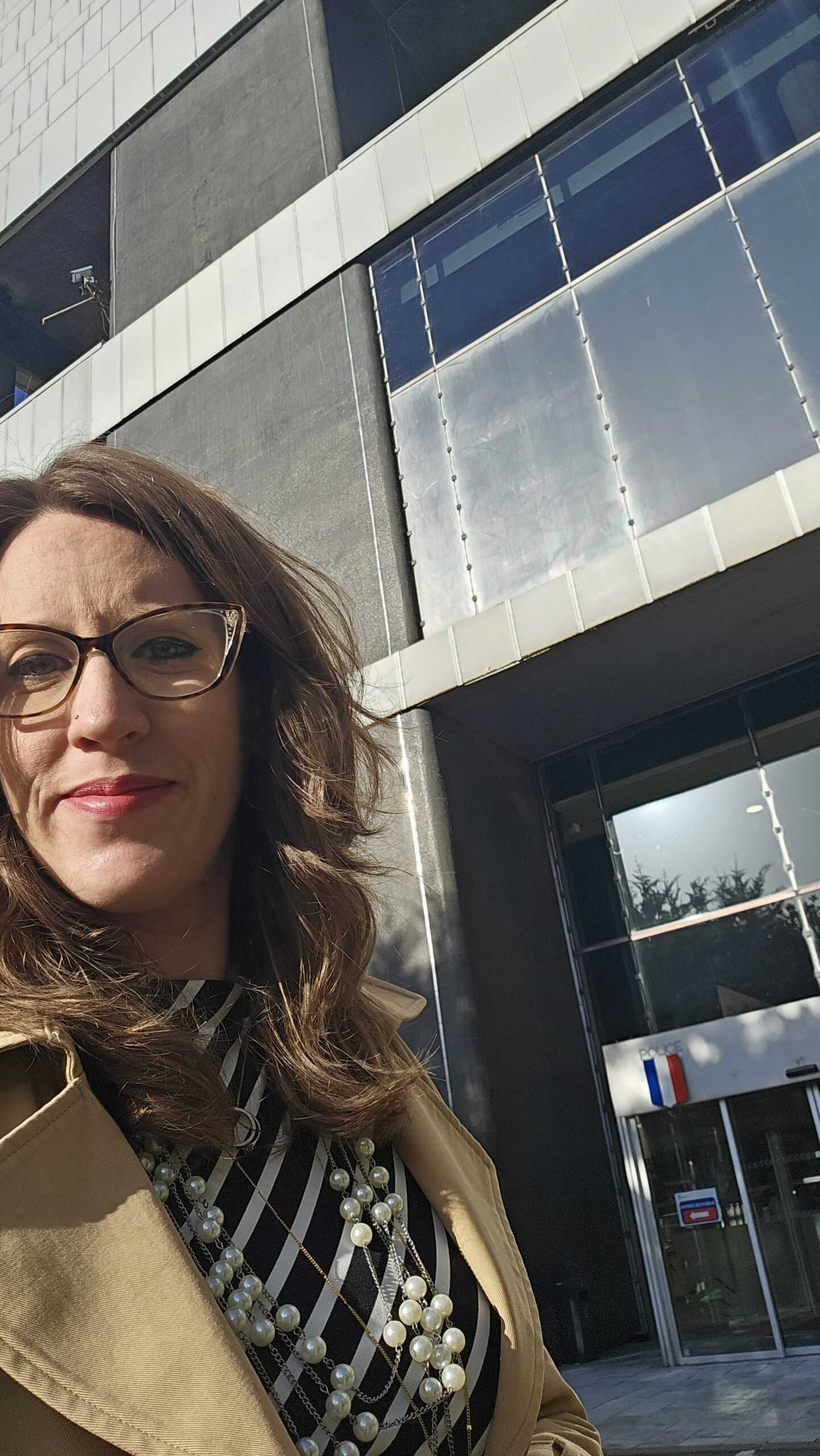
We went to the second floor, the same place where I had dropped off the application in December. A small sign directed us to sit in the waiting area in front of the red doors. That was the naturalisation interview area. One other person was waiting. All four cabins appeared to be in use.
Our name was called a little after 11. Two female agents welcomed us in and got straight to business. They explained the structure: they would verify our information and ask us questions about our life together. The questions were similar to what the gendarme had covered — how we met, what we do professionally, how we spend our free time, common interests, family plans.
Then they asked Thomas to step outside.
Alone with the two agents, the questions shifted. How do we divide the household tasks? What happens when we argue? How does Thomas support me? How does he treat me? How often do I visit my family back home? What does my family think of my decision to live in France? Why do I want to become French?
Then, the final question: which of the three devises — Liberté, Egalité, Fraternité — do I most identify with, and why?
Once they were satisfied with my answers, they called Thomas back in. They told us to expect a decision within 12 to 18 months and suggested I check the Journal Officiel after six to eight months. I noted internally that this was not quite right. For nationality by marriage, your name appears on the electoral list, not the JO. I checked the electoral list when the time came.
At the end I received a récépissé confirming that my application had been forwarded to the minister for a decision. The whole interview took about 30 to 35 minutes.
Waiting for the Decision
Because I applied by marriage rather than by décret, there was no online account to check for updates. It was a wait-and-see situation.
My préfecture interview was at the start of July and August is a holiday month, so I gave it until the end of August before I started checking the electoral list. The process is straightforward: sign in to your service-public.fr account, enter your name and postcode, and it tells you whether you are registered.
On Friday, September 6, 2024, I checked and found my name on the list.
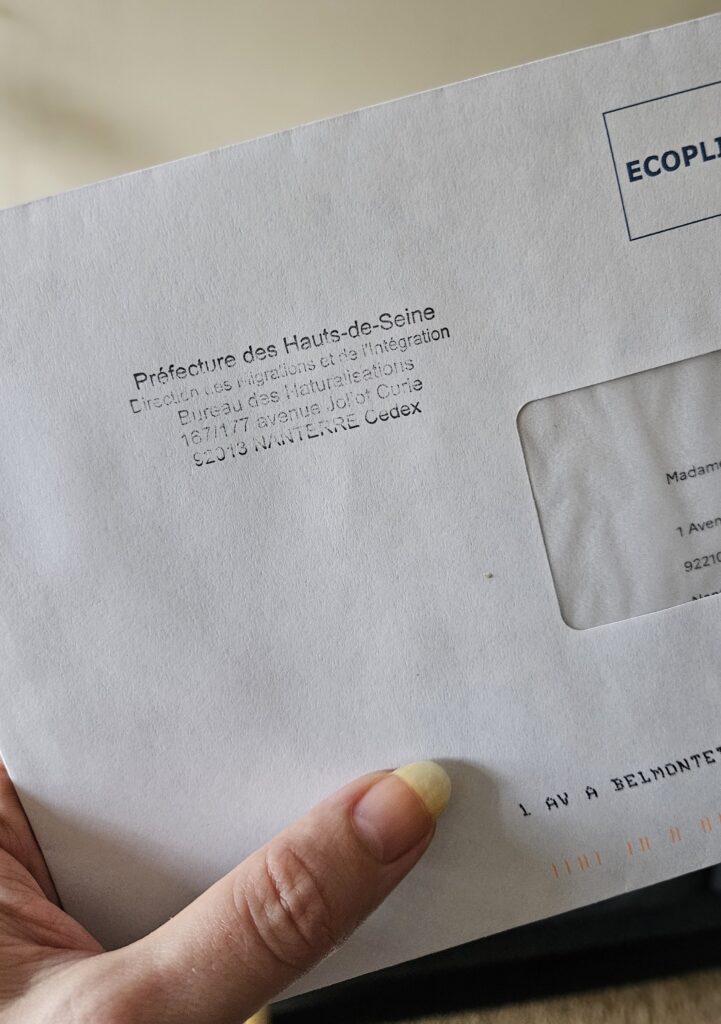
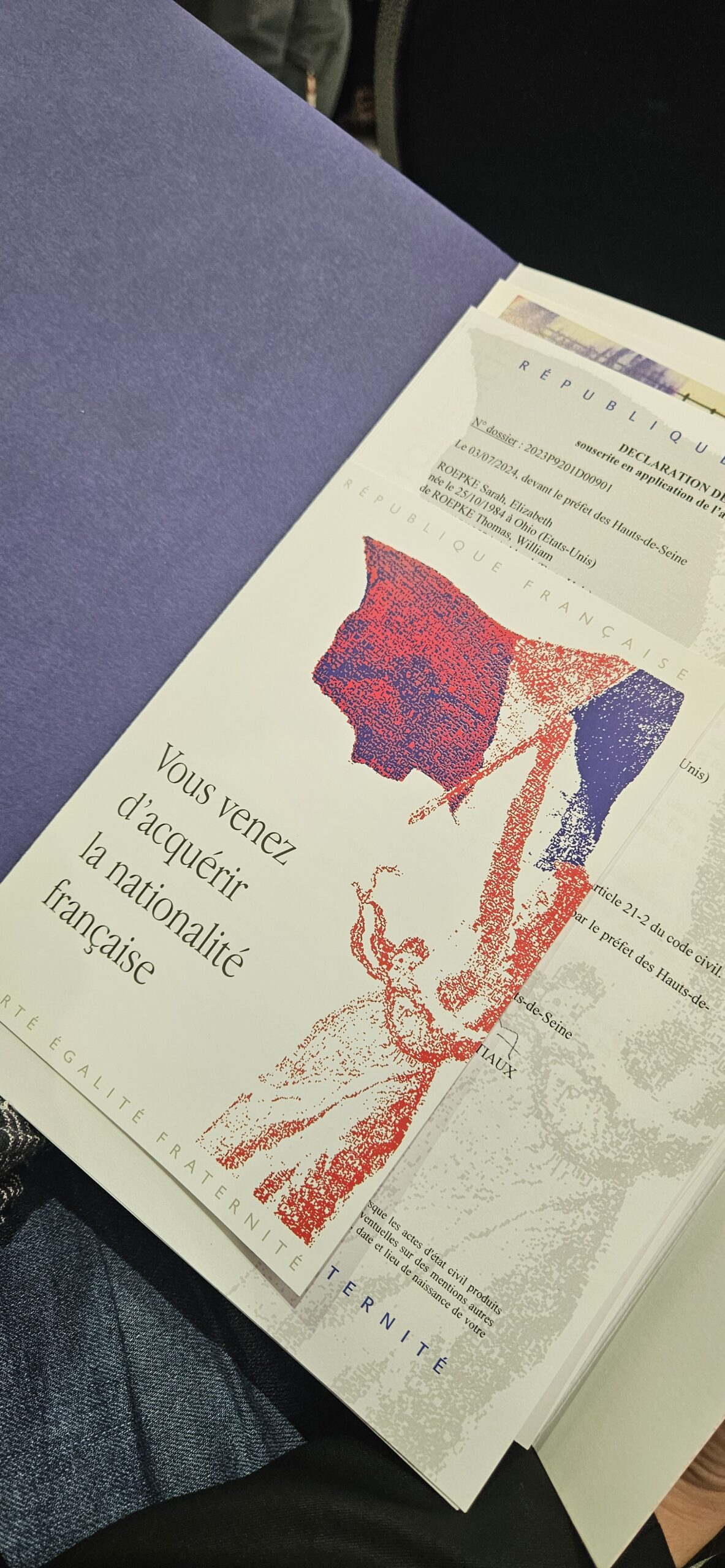
The following Monday I received a letter from the Préfecture des Hauts-de-Seine, Directions des Migrations et de l’Intégration, Bureau des Naturalisations. I had been granted French nationality on August 27, 2024, and was invited to attend a ceremony at the préfecture.
The Nationality Ceremony
My ceremony took place on October 16, 2025 , nine days before the birth of my daughter, which added a certain sense of timing to the whole thing.
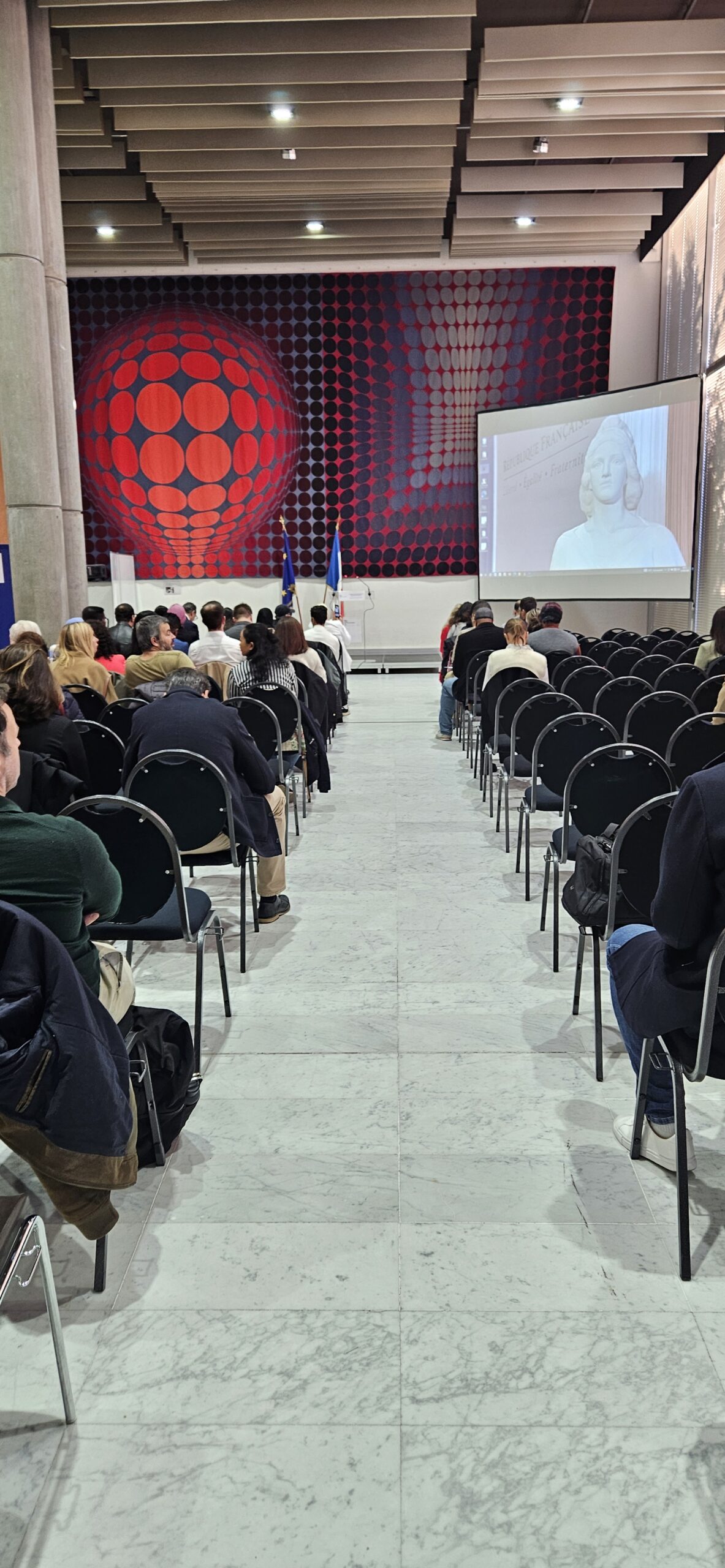
We arrived 15 minutes early and were directed to the second floor where the hall was set up. There was a check-in table at the entrance. You hand over your carte de séjour and they pull your folder from a box. The woman checking me in asked if I wanted to be moved to the front of the queue, given how visibly pregnant I was. I asked how many people were on the list. She said 86. I said yes, of course.
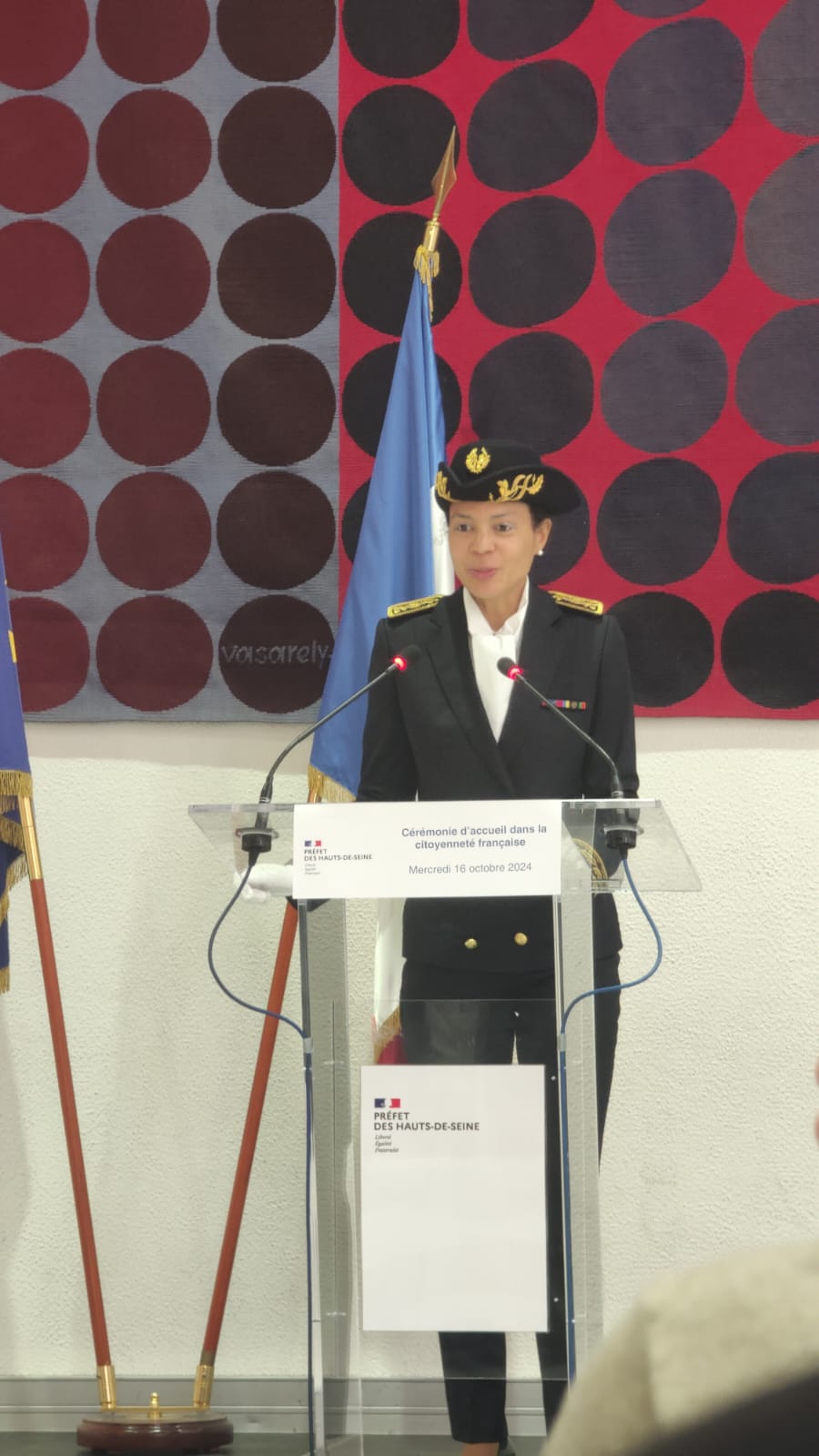
The ceremony lasted about an hour. There was a short video presentation on France, French culture, and what it means to be French, followed by a speech from the préfète déléguée Egalité des Chances, Madame Nadège Baptista.
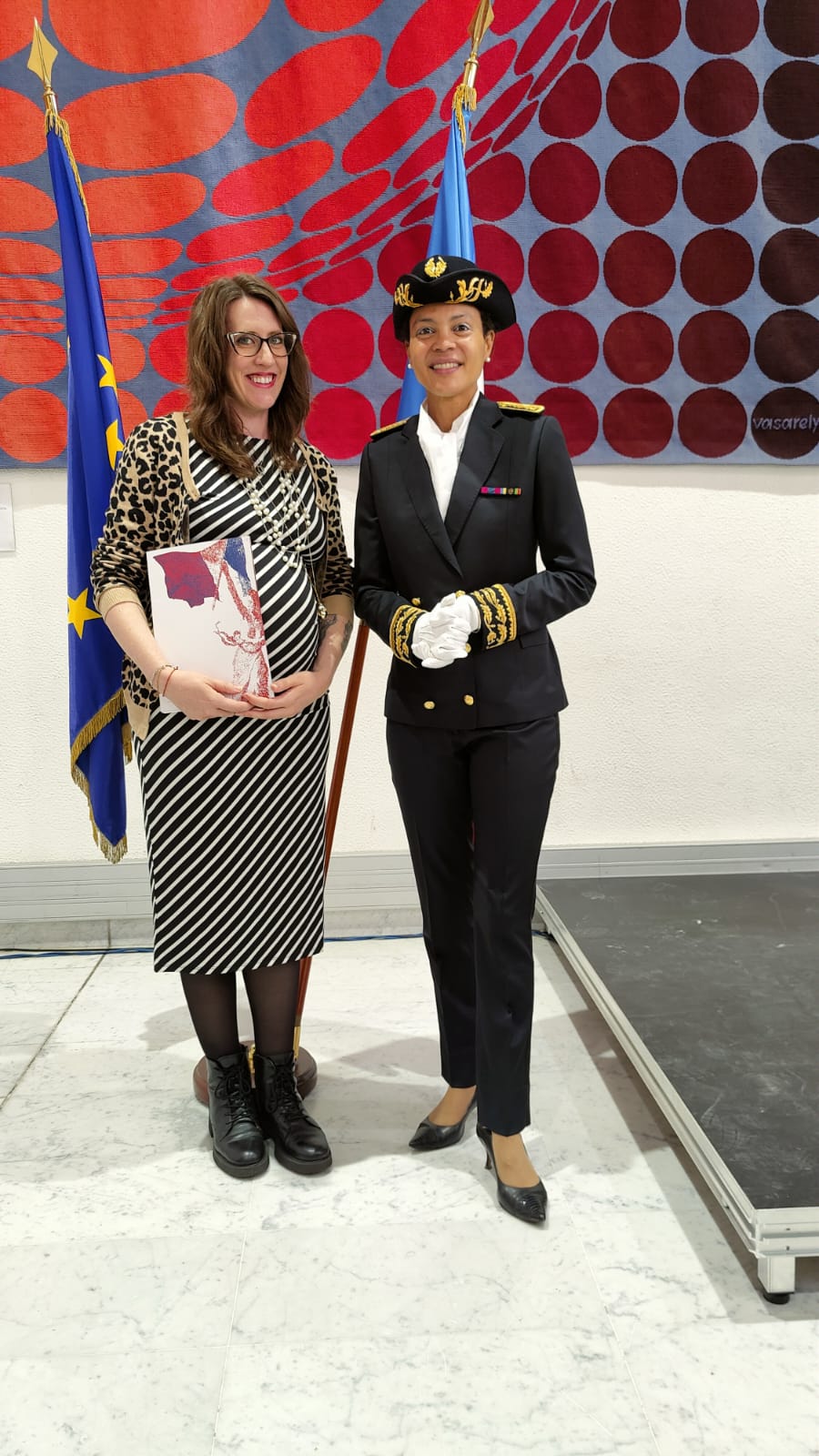
After the speech, names were called one by one. Each person walked to the front, Mme Baptista handed them their folder and congratulated them, and they returned to their seat. Once all names had been called, we were asked to stand and sing La Marseillaise, the words were projected on a screen. Then a long round of applause.
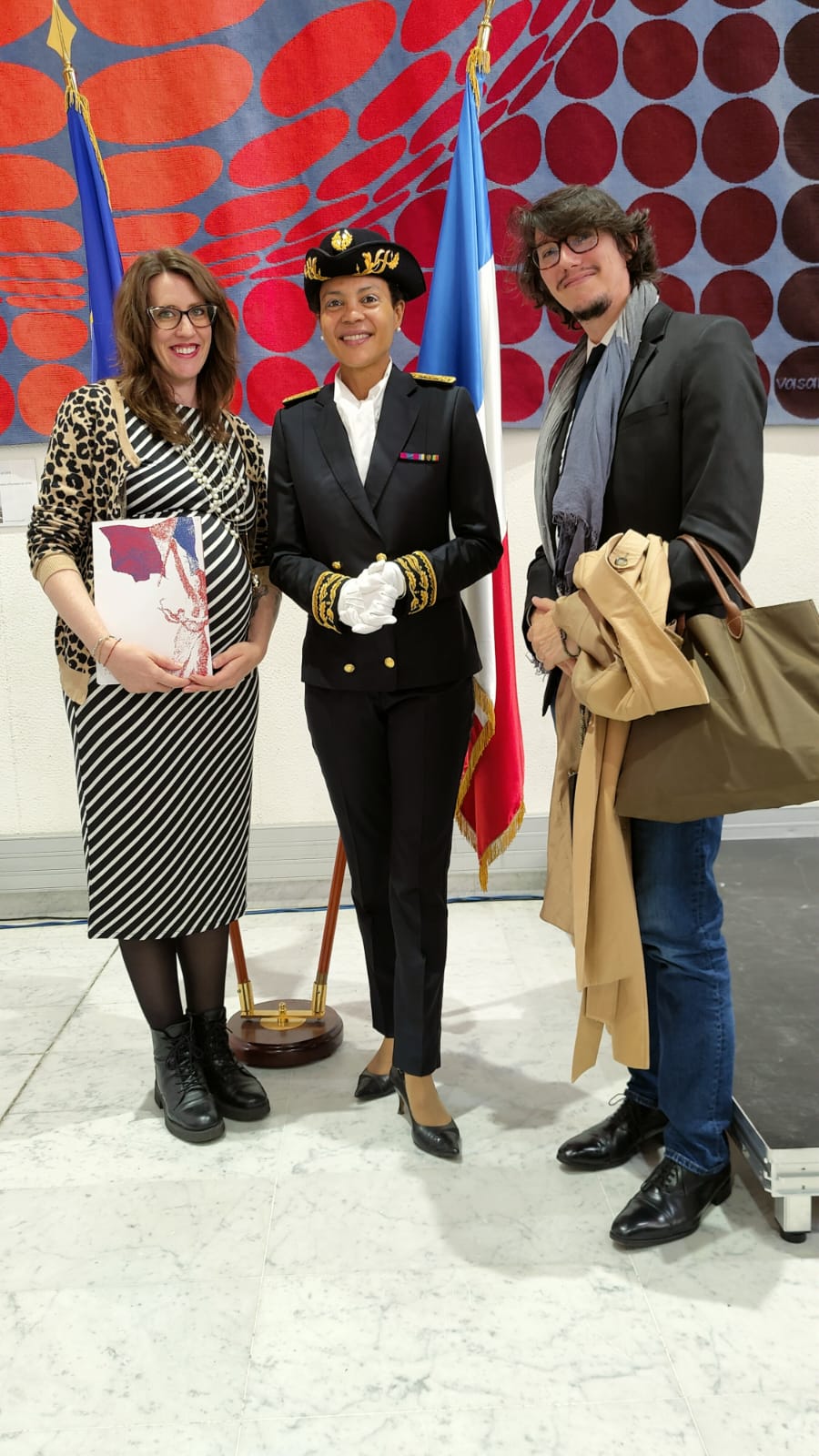
There were drinks and snacks after the ceremony, and the option to have your photo taken with Mme Baptista.
Five years, four visa renewals, one 10-year card, one gendarme inspecting a closet, and one préfecture interview at six months pregnant. That is the story of how I became French.
Resources
Service-Public: nationality by marriage
Hauts-de-Seine préfecture naturalisation page
FBI background check information for France
How I Applied for My French 10-Year Residency Card
Transcription de l’Acte de Mariage: Step by Step
OFII Convocation Day One: Everything You Need to Know About the CIR


You May Also Like
Apartment Hunting in Paris: A Guide for American Expats
22 April 2021
Facturation Électronique 2026 : What Every Freelancer and Small Business in France Needs to Know
1 May 2026
One Comment
Pingback: