Your OFII Civics Training: What to Expect Over Four Days
Last updated: 13 March 2026
Your OFII Civics Training: What to Expect Over Four Days
Once you have signed your Contrat d’Intégration Républicaine and completed your medical visit, the next step is four days of mandatory civics training. The formation civique, as it is officially called, is free and organised by OFII on your behalf. Your convocation letter, issued at the time of your CIR signing, will tell you where to go and when.
I completed mine in September 2020, so some of the logistical details have changed since then. What has not changed is the structure: four full days, five themes, and a lot of information delivered in a short amount of time. Here is what to expect.
What Has Changed Since 2026
If you are going through this process now, there is one significant update you need to know about before you walk into day one.
Before 2026, completing the four days of training was enough. Attendance was the obligation. Since January 2026, a separate civic exam has been introduced as part of the 2024 immigration law reforms. Passing this exam is now required in order to obtain a multi-year residency card or a carte de résident. Attendance alone is no longer sufficient.
The exam is not administered by OFII directly. It is organised by two accredited bodies: the Chambre de Commerce et d’Industrie de Paris (CCIP) and France Education International (FEI). You register independently once your training is complete, either via test-civique.fr or by contacting an accredited exam centre. There is a registration fee of approximately 70 to 80 euros.
The government has set up a free preparation website where all the training themes are available to review and study for the exam. Use it. Day four of the training now specifically includes exam preparation, but having looked through the material beforehand will help.
Tips Before You Go
- Bring a notebook and pen. You will genuinely thank yourself later.
- Your convocation letter will include your location. Check it carefully. Training centres vary by region and the Paris provider has changed since 2020.
- Arrive on time. If you are an early arriver like me, be aware there may be no one in the office yet to let you in. I waited outside all four mornings.
- Bring a thermos of coffee. Your day starts early.
- Wear comfortable clothes. The chairs are not built for a full day of sitting and you do not move around much.
- Lunch is provided at no cost, but do not get your hopes up. Mine was a tuna sandwich on a demi baguette, apple sauce, and a bottle of water. Bring something to supplement if you need it. You won’t have enough time to go somewhere else.
- You will be asked to leave the building during the lunch break. Scope out the area around your building in advance — there was not much near the one I attended.
- Have your paper convocation and passport ready at the door each day. They check both before telling you which room you are in.
- At the end of each day you receive an attestation de présence. Keep every single one. You will need them for your titre de séjour renewal.
The Structure: Four Days, Five Themes
The four days are built around five core themes that cover the basics of setting up life in France: discovery, health, work, parenthood, and housing. Here is a condensed overview of what each theme covers.
Discovery of France
Day one sets the scene. You cover the political structure of France (a unitary republic, not a monarchy), the core principles of the Republic, and the national symbols.
The principles: Liberté, Egalité, Fraternité, and Laïcité. That last one gets its own time — the separation of church and state is taken seriously and comes up in several contexts throughout the four days.
The symbols: the tricolore, Marianne, le coq gaulois, la Marseillaise, and the 14 Juillet. These are not just trivia. Understanding why they exist and what they represent is part of what the training is trying to give you.
Health in France
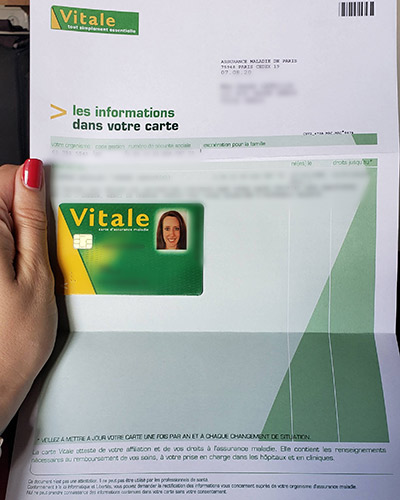
The health session covers how to navigate the French healthcare system as a newcomer: emergency numbers (15 for SAMU, 18 for the fire brigade, 114 by text if you cannot hear), how the Sécurité Sociale works, how to apply for your carte vitale, and how to declare a médecin traitant.
The basic breakdown: the state covers around 70% of healthcare costs. The remaining 30% is typically covered by a mutuelle, which is either offered through an employer or purchased privately. If you cannot afford one, state programmes exist for various situations.
Specialists you can access directly without going through your médecin traitant first: gynaecologists, dentists, paediatricians, and psychiatrists.
Working in France
This session covers the French labour market: the standard 35-hour work week, the two main contract types (CDI for open-ended, CDD for fixed-term), how pay is discussed in brut (gross before taxes), and the role of the convention collective in your specific sector.
There is also time devoted to job hunting resources and what to do if your foreign diploma is not recognised in France. The programme ENIC-NARIC handles diploma recognition, and the VAE (validation des acquis de l’expérience) allows professional experience to be formally validated — something I have kept in mind given my own food service background.
Note: the SMIC (minimum wage) figure discussed in class will not match what appears in the original version of this post. It is updated annually. Check the current rate at service-public.fr.
Being a Parent in France
This theme covers parental responsibilities under French law, the school system from maternelle through lycée, and the support structures available to families. Enrolment in school is compulsory from age 3 to 16. Public schooling is free and secular. There are specific provisions for children who do not speak French.
If you have children or are planning to, this session is worth paying attention to. The instructors can answer questions specific to your situation.
Housing in France
The housing session covers tenant rights and landlord obligations, what documents you need to put together a dossier for a rental application, and the state aid programmes available for housing costs and deposits. The walkthrough procedure (état des lieux) at the start and end of a tenancy is explained in detail.
A rental dossier typically requires: a photocopy of your identity document, your residency permit, your last three pay slips or last two years of tax declarations, and a proof of address. A landlord can ask for more but cannot ask for your medical history.
Day Four: Your Choice (and Now, Exam Prep)
When I attended in 2020, day four was a workshop day where you chose from a list of specialised sessions based on your situation. I chose the one run by a local lawyer that went into detail on the visa and administrative process — easily the most useful day of the four.
Since 2026, day four now includes preparation for the civic exam. Whether the workshop format still exists alongside this is worth confirming with your training centre. Either way, come to day four having already looked through the themes on formation-civique.interieur.gouv.fr.
The Civic Exam: What You Need to Know
Once your four days are complete, you will need to register independently for the civic exam. This is a separate step that OFII does not administer. The two accredited bodies are the CCIP and France Education International (FEI). You can find exam centres and registration information at test-civique.fr.
The exam costs approximately 70 to 80 euros and tests your knowledge of the themes covered during training. Prepare using formation-civique.interieur.gouv.fr. You need to pass before submitting your application for a multi-year residency card or carte de résident.
Overall: What to Expect
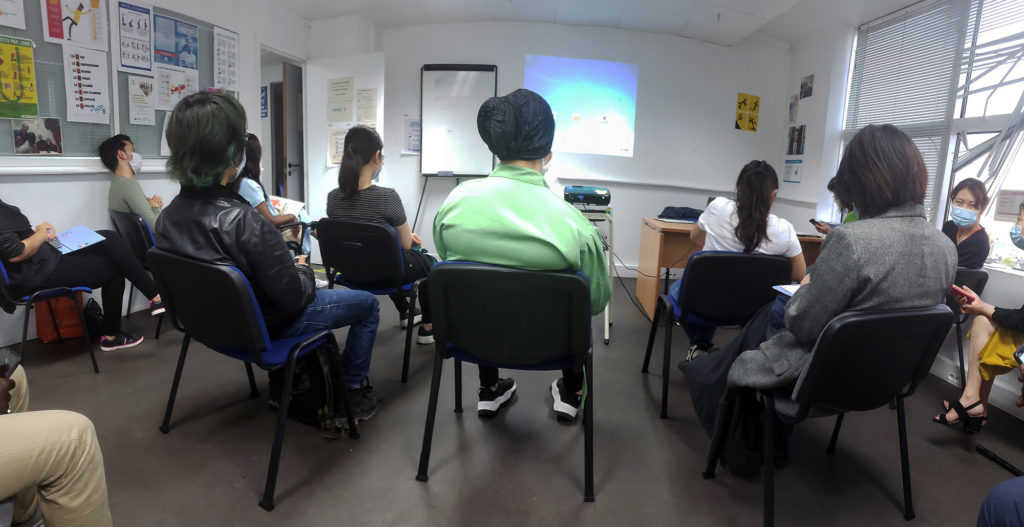
I had three different instructors across my four days, which kept things from feeling repetitive. There were about 16 of us in the room during Covid restrictions — the group is typically larger in normal circumstances. You will be with many of the same people for three of the four days, and there is genuine opportunity to ask questions about your specific situation.
The information is dense but practical. Bring your notebook, take notes on anything relevant to where you are in your own process, and do not underestimate the lunch situation. Other than that, it is a manageable four days.
Resources
Official training preparation site

You May Also Like
The Ins & Outs of a French Dossier
28 April 2021
French Visa and Residency Terms Explained
14 September 2021
2 Comments
Pingback:
Pingback: